Italy’s Sun-Drenched South: Cheap Beachfront Condos in Calabria and Molise
Discover how to buy a Mediterranean beach condo in Calabria or Molise for under $80,000 USD, complete with practical buying tips, legal steps, and top coastal towns.
The Italian Dream on a Budget: Discovering the Affordable South
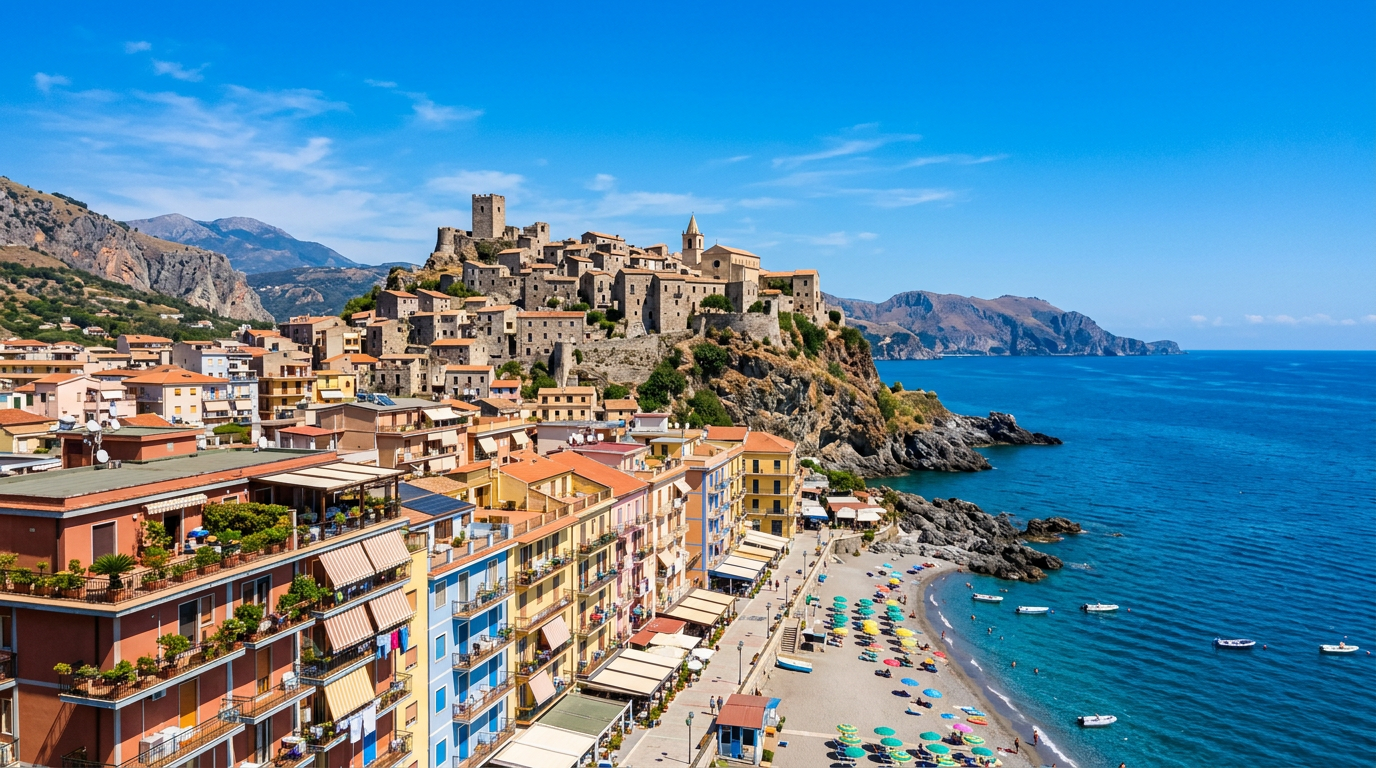
When most property buyers envision a coastal retreat in Italy, their minds drift to the dramatic cliffs of Amalfi, the exclusive harbors of Portofino, or the romantic seaside villages of Cinque Terre. In these global hotspots, even a modest studio apartment can command millions of dollars, placing the Italian Riviera far out of reach for budget-conscious buyers. However, a massive geographical and economic divide exists between northern and southern Italy. By turning your gaze to the lesser-known southern regions of Calabria and Molise, you can find habitable, sea-view condos starting between $55,000 and $90,000 USD.
The stark price difference is not a reflection of inferior beaches or less sunshine. On the contrary, southern Italy boasts some of the cleanest, warmest, and most visually spectacular waters in the entire Mediterranean basin. Instead, these low prices are driven by historical economic disparities, a decline in the local youth population migrating north for work, and a lack of aggressive English-language marketing. For foreign buyers willing to step off the beaten tourist path, these factors create an incredibly lucrative buyer's market where the cost of a coastal apartment matches the price of a used car in North America.
Living in the Italian south also means embracing a slower, deeply authentic way of life. Here, the local economy revolves around seasonal agriculture, fresh seafood, and domestic Italian tourists who arrive in August. English is rarely spoken outside of real estate offices, and the daily afternoon siesta remains a sacred tradition. For those seeking an immersive Mediterranean lifestyle alongside a highly affordable piece of real estate, Calabria and Molise represent the last true coastal frontiers in Western Europe.
Calabria’s Cedar Coast: Sea-View Condos Under $60,000 in Scalea
Located on the upper Tyrrhenian coast of Calabria, the Riviera dei Cedri (Cedar Coast) is home to the ultimate budget-buyer hotspot: the historic town of Scalea. During a major construction boom in the late 1970s and 1980s, developers built thousands of multi-story apartment blocks to serve as summer vacation homes for families from Naples and Rome. Decades later, many of these families are selling their properties due to generational shifts, resulting in a massive inventory of small, functional beach condos priced between $45,000 and $70,000 USD.
These properties are typically one- or two-bedroom units located in gated complexes. While the exteriors of these concrete buildings are often utilitarian, the apartments themselves frequently feature spacious balconies with direct views of the azure sea and the ancient watchtowers dotting the coastline. The historic center of Scalea, with its labyrinth of medieval stone stairways and traditional trattorias, is just a short walk or bike ride away from these affordable residential zones.
Neighboring towns like Santa Maria del Cedro and Praia a Mare offer similar affordability with slightly different vibes. Praia a Mare features wide volcanic-sand beaches and views of the dramatic Dino Island, famous for its sea caves. In these towns, a budget of $75,000 USD can easily secure a fully furnished, turnkey apartment situated less than a ten-minute walk from the water's edge, making it one of the most cost-effective coastal regions anywhere in Europe.
The Wild Ionian Coast: Bova Marina and Caulonia
If you prefer expansive sandy beaches, warmer water temperatures, and a more rugged landscape, the Ionian coast of Calabria—stretching along the 'sole' and 'toe' of the Italian boot—is an exceptional alternative. Here, the mountains of the Aspromonte National Park slope directly down to meet the sea, creating a dramatic backdrop for historic coastal settlements like Caulonia Marina, Roccella Ionica, and Bova Marina.
In towns like Caulonia Marina, the pace of life is incredibly tranquil. The beaches here are vast and rarely crowded, even in the height of summer. Real estate in this region consists of low-rise apartment buildings and traditional townhouses. A budget of $65,000 to $95,000 USD is sufficient to purchase a sea-view condo with a terrace. Many of these properties have been held by local families for decades and may require minor cosmetic updates, but they are fully structural and ready for immediate occupancy.
Further south lies Bova Marina, a coastal town with deep historical roots in Greek culture, where some older residents still speak Grecanico, a localized Greek-Italian dialect. This area offers pristine, uncrowded beaches and incredibly affordable dining and living costs. Purchasing a property here provides not just a physical home, but a front-row seat to an ancient, slow-paced Mediterranean culture that has remained largely untouched by globalization.
Molise’s Hidden Coastline: Termoli and Campomarino Lido
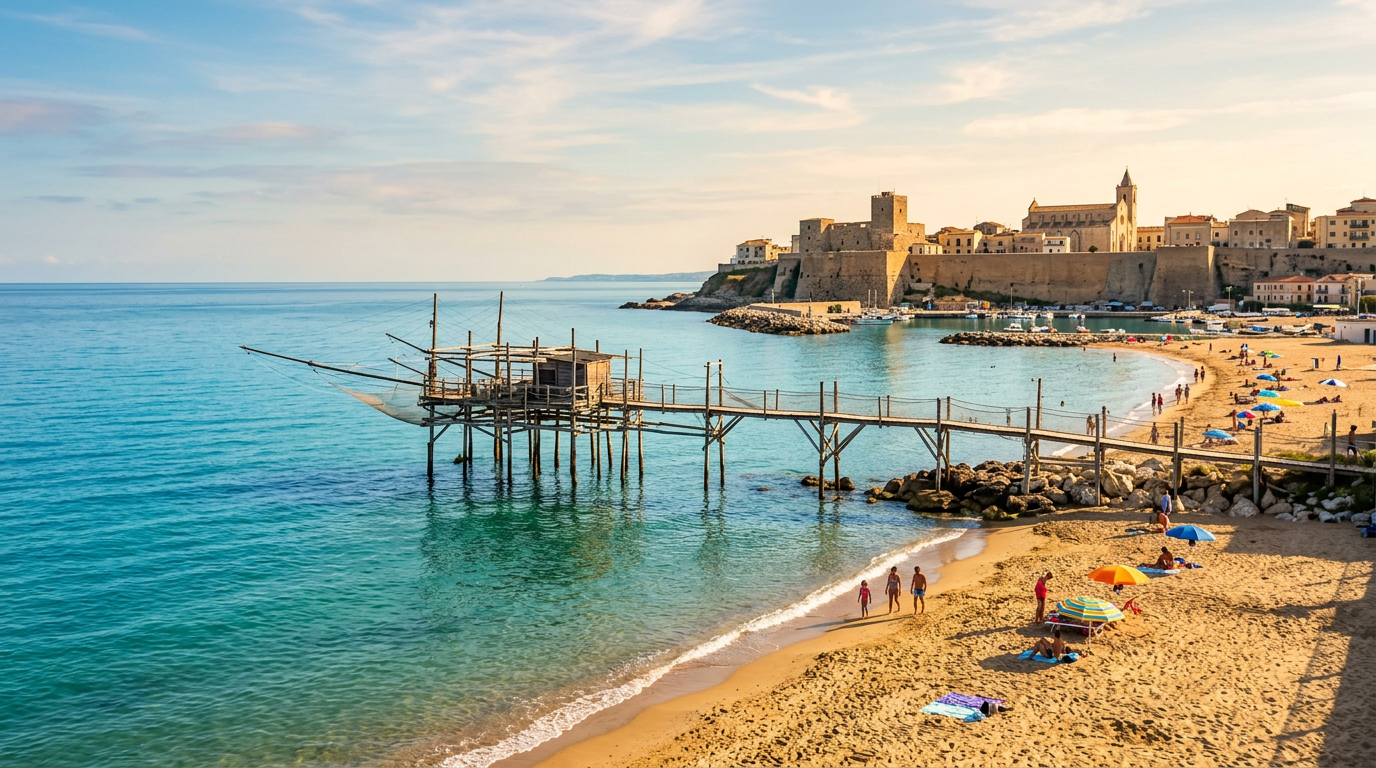
Molise is famously referred to by Italians as the region that 'doesn't exist' because it is so frequently overlooked by tourists and media alike. Tucked between Abruzzo and Puglia on the Adriatic Sea, Molise possesses a brief but stunning 22-mile coastline characterized by rolling sand dunes, clean waters, and traditional 'trabocchi'—historic wooden fishing platforms built on stilts over the water.
The crown jewel of this coast is Termoli, a historic walled city with a colorful harbor, a dramatic Swabian castle, and broad, family-friendly sandy beaches. While the historic core of Termoli command premium prices, the surrounding residential neighborhoods and the adjacent beach resort town of Campomarino Lido offer outstanding value. In Campomarino Lido, you can find modern two-bedroom beach apartments located just 200 meters from the sand for $85,000 to $120,000 USD.
Molise's Adriatic coast is highly connected, offering direct train routes to Rome and Bari, as well as ferry services from Termoli to the pristine Tremiti Islands. For buyers who want affordable coastal living without feeling completely isolated from major transit networks, the Molise coast strikes a perfect balance between undiscovered charm and practical accessibility.
Legalities and Ownership Rules for Foreign Buyers in Italy
Italy has a remarkably open policy toward foreign property buyers. Citizens of the United States, Canada, the United Kingdom, and EU countries have reciprocal buying rights, meaning they can purchase real estate under the exact same legal conditions as Italian citizens. You do not need a residence visa to buy or own property in Italy, though ownership alone does not grant you the right to stay in the country beyond the standard 90-day tourist allowance for non-EU citizens.
The purchasing process begins by obtaining a 'Codice Fiscale' (Italian tax code), which is required for all financial transactions, and opening a local bank account. Once you find a property, you will make a formal purchase offer ('Proposta d'Acquisto') accompanied by a small deposit. This is followed by the preliminary contract ('Compromesso'), where a larger deposit of 10% to 20% is paid. The sale is finalized before an Italian notary public ('Notaio'), who acts as an impartial officer of the state to verify the title deed and record the transaction in the land registry.
It is crucial to budget for transaction costs, which typically add 10% to 15% to the purchase price. These costs include the notary fee, translation services, a registration tax (which is 9% of the cadastral value for second homes, rather than the purchase price), and real estate agency commissions. In southern Italy, agency fees are usually 3% to 4% of the purchase price, but many agents charge a flat minimum fee of €2,000 to €3,000 (roughly $2,200 to $3,300 USD) for very cheap properties, which buyers should calculate into their total budget.
Practical Realities: Taxes, Condo Fees, and Remote Management
While buying a cheap Italian beach house is highly accessible, buyers must understand the ongoing holding costs. Annual property taxes ('IMU') are only charged on secondary homes, and for a modest $60,000 apartment, this tax is generally low, ranging between $300 and $600 USD per year. In addition, there is a local waste tax ('TARI') based on the square footage of the property, which typically costs around $150 to $250 USD annually.
If you purchase an apartment within a shared complex, you will be responsible for monthly condominium fees ('Spese Condominiali'). In southern Italy, these fees are usually quite modest—averaging $30 to $60 USD per month—covering basic stairwell cleaning, communal lighting, and minor building maintenance. However, before purchasing, it is critical to have your agent verify that the seller has no outstanding condo fee debts, as Italian law can hold the new buyer liable for unpaid fees from the previous year.
Lastly, managing a property from abroad requires local support. Because southern Italy is less commercialized, you will need to establish a relationship with a local property manager or a trusted neighbor to check on the apartment during the winter months, assist with utility hookups, and handle occasional maintenance. Buying a 'turnkey' apartment that has been recently modernized is highly recommended over a fixer-upper, as navigating Italian construction permits and finding reliable local contractors can be a daunting process for non-Italian speakers.
Browse the actual listings
Every property we mention has a full page with photos, local-currency and USD pricing, and a location map.