← Back to Home Page
🆕 New release

Cheap Beach Houses for Sale
In South Africa

South Africa has almost 3,000 kilometres of coastline on three oceans, and a currency that makes it one of the best-value beach markets on earth. Across the 5 South African coastal listings we track, the cheapest is $42,391 in Elands Bay and the average asking price is $69,783.

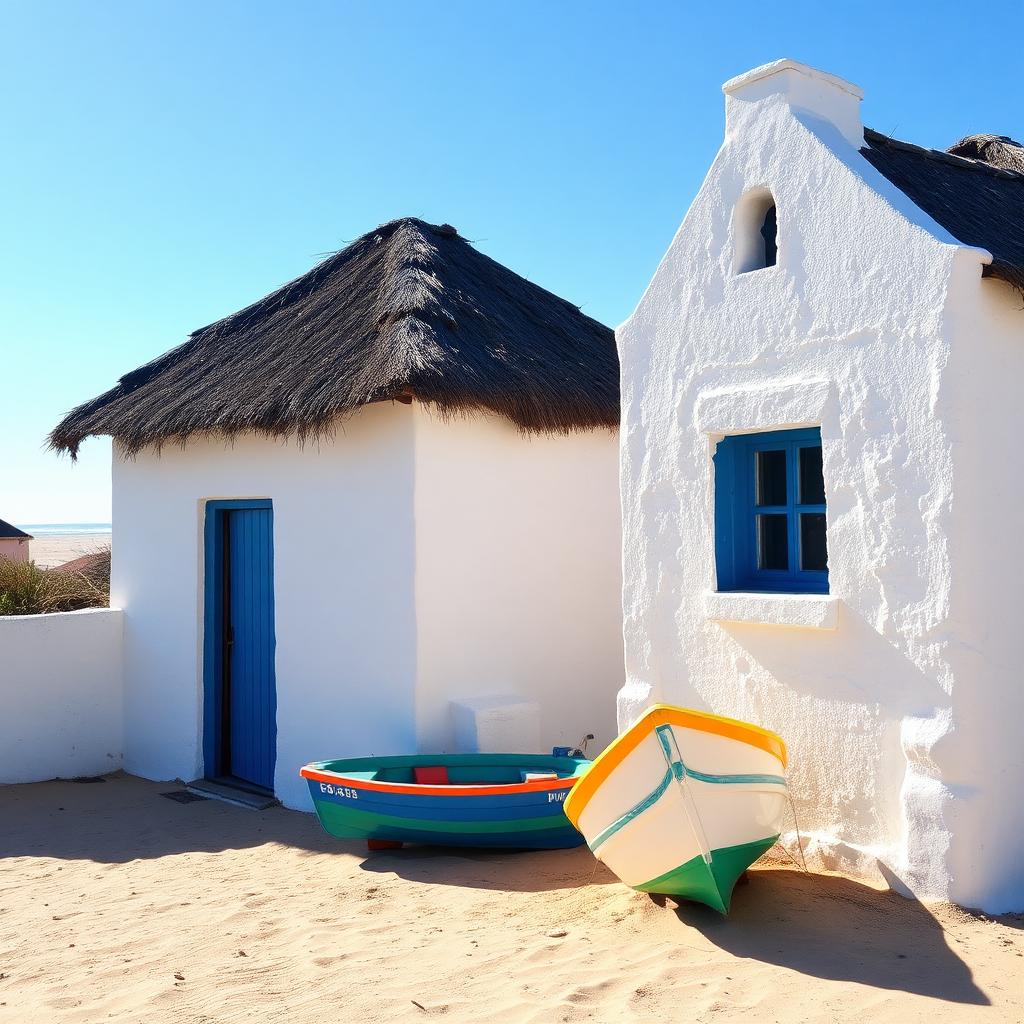
Whitewashed cheap beach houses for sale in South Africa on golden sand with colourful fishing boats

"Cheap beach houses for sale in South Africa" is one of those searches that actually delivers. Unlike most of the developed world, South Africa combines a genuinely long, varied and beautiful coastline with a weak currency, no restrictions on foreign ownership, a mature legal system with reliable deeds registration, and English as the working language of every conveyancer in the country. The result is a market where a solid three-bedroom house within walking distance of the sea routinely trades for less than one and a half million rand — under $80,000 USD at current rates — outside the Cape Town peninsula.

That last qualifier matters. Cape Town itself is an expensive, globally traded property market: Camps Bay, Clifton and Muizenberg are priced against London and New York money, not against local salaries. But drive ninety minutes north to the West Coast, three hours east to the Overberg, or fly to the Eastern Cape and KwaZulu-Natal, and the numbers collapse. This guide covers where those cheap beach houses actually are, what they cost in rand and USD, what foreigners need to know legally, and the running costs nobody mentions until after transfer.

What your money actually buys in South Africa

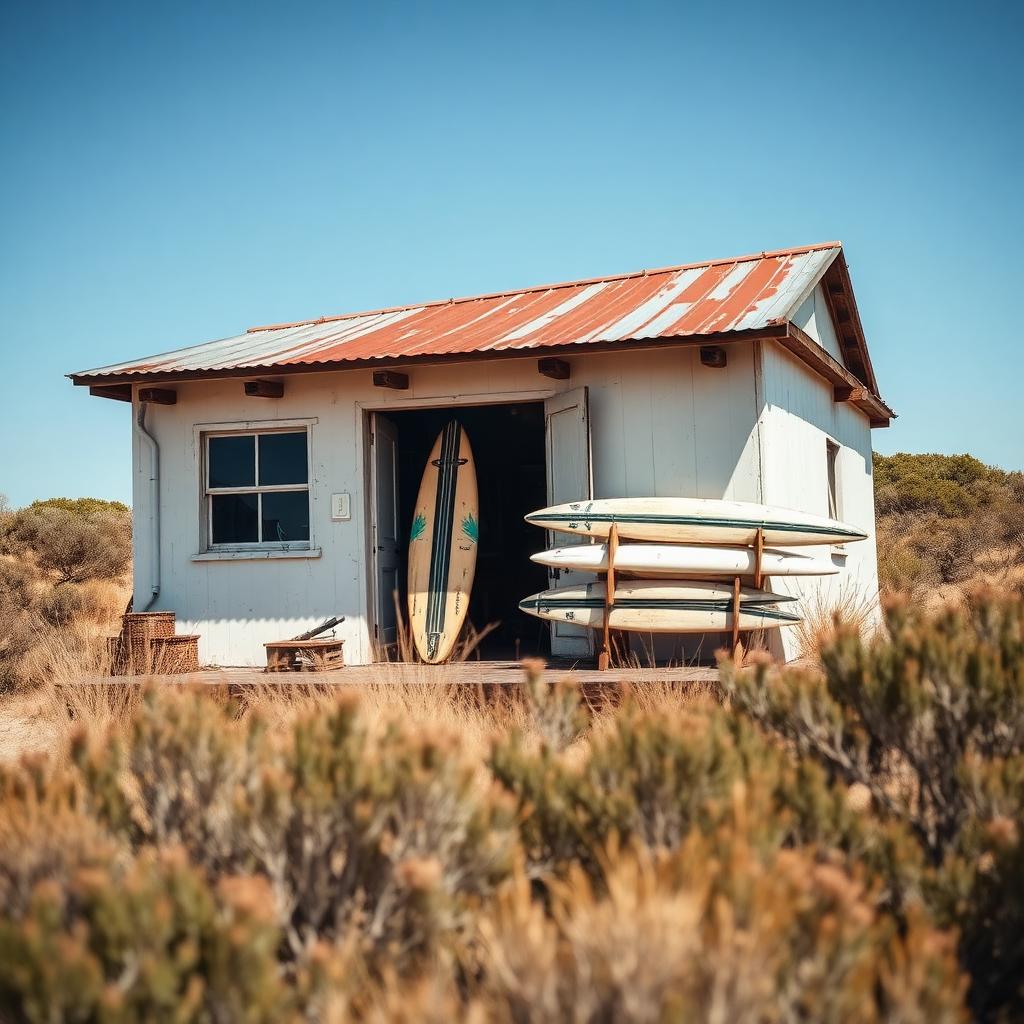
At the bottom of the market — roughly R700,000 to R1,000,000, or $38,000 to $55,000 — you are buying a modest two-bedroom cottage or surf shack: 60 to 80 square metres, one bathroom, a small stoep, a corrugated roof, and a short walk to the sand. These are real, liveable houses in real towns, not shells. Our cheapest South African listing right now is the Elands Bay surf shack in Elands Bay, Western Cape, at ZAR 780,000 — about $42,391.

Between R1,200,000 and R1,800,000 ($65,000–$98,000) the market changes character completely. You get three bedrooms, two bathrooms, a proper kitchen, a braai area, a garage, often a sea view, and a location in a town with a supermarket, a pharmacy, a doctor and a school. That is the sweet spot most foreign buyers land in, and it is extraordinary value by any international comparison.

Above R2,500,000 ($135,000) you are into architect-designed houses on the dune, direct beachfront in established resort towns, and holiday homes with rental track records. Even there, the price per square metre remains a fraction of Portugal, Spain or Australia for a comparable position on the water.

As everywhere, position on the sand carries a premium — typically 40 to 60 per cent over an identical house three streets back. In South Africa there is a second, less obvious premium: security. Homes inside a gated estate or a managed security complex cost more up front and carry a monthly levy, but they are what most buyers ultimately choose for a house that stands empty part of the year.

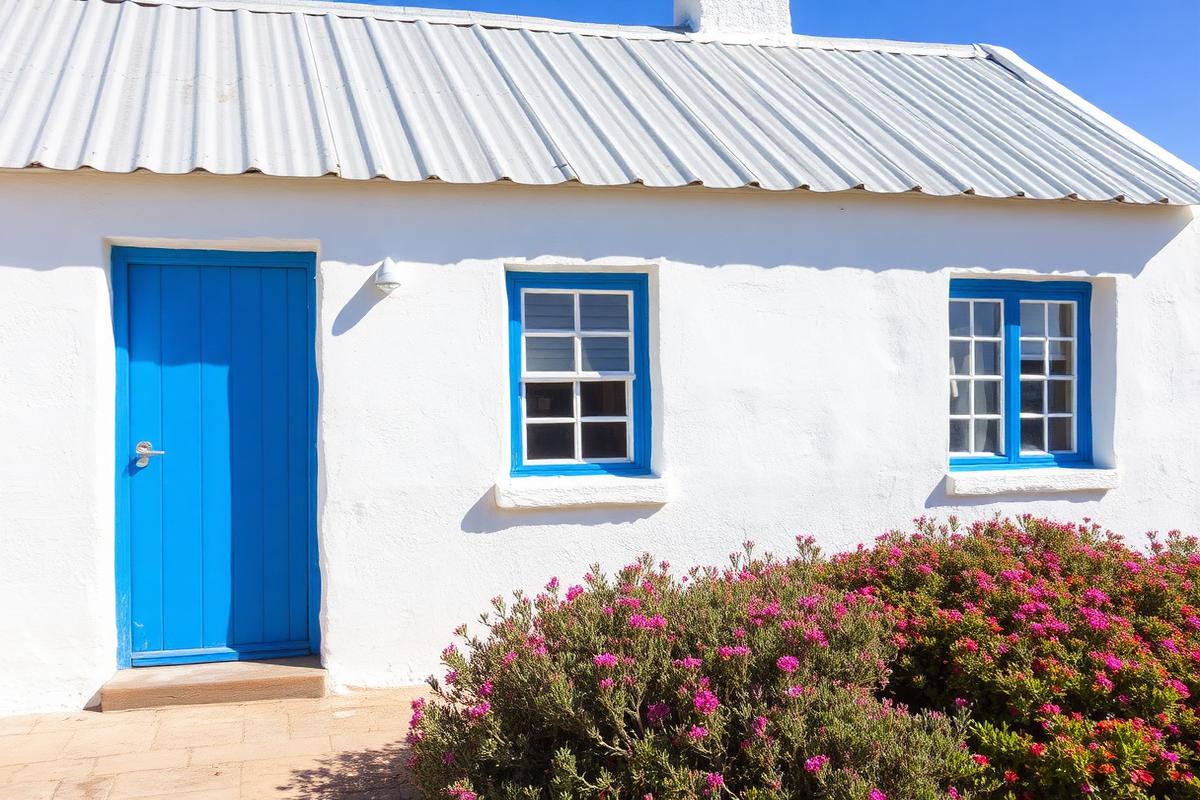
Whitewashed West Coast fishing cottage with blue shutters above a turquoise Atlantic bay in South Africa

The Western Cape: West Coast fishing villages and the Overberg

The West Coast north of Cape Town is the most photogenic cheap coastline in the country. Paternoster, with its whitewashed cottages, black rocks and crayfish boats, is the poster town — and while the best beachfront there has been discovered, streets one and two back remain reachable. Elands Bay, ninety minutes further north, is a legendary left-hand point break with a village attached and prices that still start under R900,000.

South and east, the Overberg delivers a different kind of value. Struisbaai has a fourteen-kilometre stretch of white sand, Africa's southernmost harbour, and thatched or whitewashed cottages that trade well below equivalent stock on the Garden Route. Nearby Arniston, Bredasdorp and Gansbaai serve the same market. Winters here are wet and windy, summers are dry and hot, and the whale season from June to November brings southern rights into the bays in numbers you have to see to believe.

Practical notes for the Western Cape: water is the constraint. The 2018 Cape Town drought reset how everyone thinks about supply, and any house you buy should have a JoJo tank and, ideally, a borehole. Load-shedding has eased but has not vanished — budget for an inverter and a small battery. Both are one-off costs of R40,000–R120,000 that transform daily life.

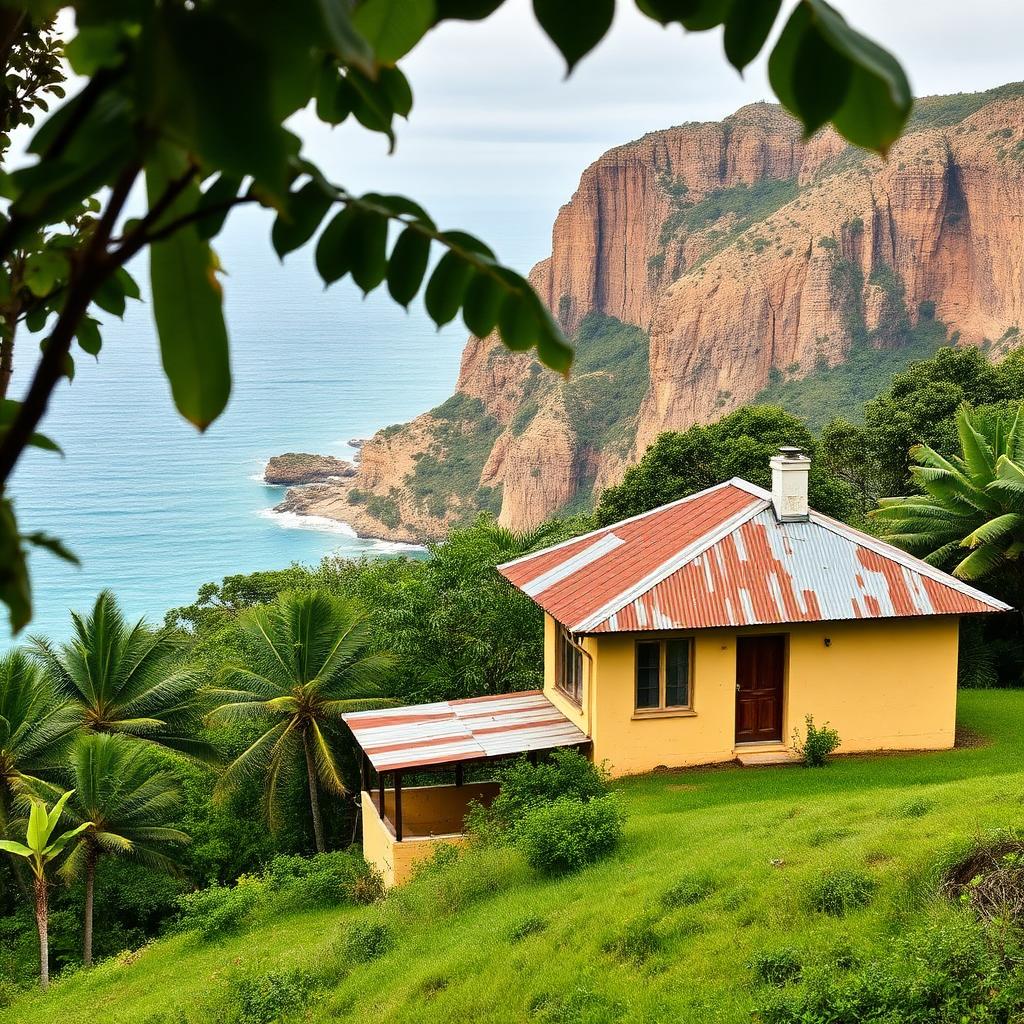
Green rolling hills above an empty golden Wild Coast beach in the Eastern Cape, South Africa

The Eastern Cape and Wild Coast: the cheapest sea views in the country

The Wild Coast is where South Africa's coastal prices reach their floor. Chintsa East, Haga-Haga, Morgan Bay, Kei Mouth and Port St Johns sit on a stretch of Indian Ocean shoreline where green hills fall straight into empty beaches, dolphins pass in numbers, and the annual sardine run turns the water into a feeding frenzy each winter.

Prices are the reason people look here. A three-bedroom cottage a ten-minute walk from kilometres of unbroken sand can be had around R1,450,000, and a modest bungalow with a river-mouth view can go under R900,000. Those are USD numbers in the fifty-to-eighty thousand range for a coastline that, in Portugal or Australia, would carry a seven-figure price tag.

The trade-offs are honest ones. Infrastructure in the former Transkei is patchy: roads, municipal water and clinics vary sharply town to town, and the nearest large hospital may be in East London or Mthatha. Some coastal land in the region is held under traditional or state tenure rather than freehold title, which foreigners cannot buy — an absolutely non-negotiable check for your conveyancer before you pay a deposit. Stick to established freehold villages such as Chintsa, Morgan Bay and Kei Mouth and the process is as ordinary as buying in Cape Town.

Further west, the Sunshine Coast around Port Alfred, Kenton-on-Sea and Cannon Rocks offers a middle path: freehold title everywhere, warm Indian Ocean swimming, golf estates, and prices roughly a third below the Garden Route for a similar house.

Subtropical KwaZulu-Natal South Coast beach with palms and holiday houses on the dune

KwaZulu-Natal: warm water, subtropical living, year-round swimming

If your priority is warm water, KwaZulu-Natal is the answer. The South Coast — Scottburgh, Hibberdene, Margate, Port Edward — offers Indian Ocean sea temperatures of 22 to 26 degrees year round, subtropical vegetation, lifeguarded swimming beaches with shark nets, and some of the cheapest sea-view apartments in South Africa. Two-bedroom flats a block from the beach frequently sell between R700,000 and R1,200,000.

The North Coast, from Ballito to Zinkwazi and up towards St Lucia, is more expensive and more polished, driven by Durban commuters and estate living. The value here is not the purchase price but the rental market: KZN's domestic holiday demand is enormous, and a well-located two-bedroom unit can run high occupancy through Durban July, December and Easter.

Weather is the thing to plan for. KZN is humid and subtropical, with summer thunderstorms and periodic flooding on the coastal belt. Buy above obvious flood lines, check the roof and gutters carefully, and read the municipal history of the specific street.

Can foreigners buy a beach house in South Africa?

Yes — and this is one of the simplest ownership regimes anywhere in the world. Non-residents may buy freehold property in South Africa on exactly the same terms as citizens, in their own name, with no permit, no trust structure, and no local partner required. There are only two meaningful restrictions: you cannot buy state-owned or traditionally held communal land, and if you are financing locally, banks typically limit non-resident loans to about 50 per cent of the purchase price.

The mechanics are straightforward. A signed offer to purchase becomes a binding contract, the seller appoints a conveyancing attorney, and the deed is registered at the Deeds Office. Transfer usually takes six to ten weeks. The Deeds Office record is reliable, digitised and searchable — one of the strongest title systems on the continent.

One piece of admin that matters if you ever want to take the money out again: bring the purchase funds into South Africa through a bank and get the deposit receipted as foreign capital. That paperwork is what lets you repatriate the sale proceeds later without a fight. Keep every record of the inflow.

Closing costs and running costs — the real numbers

  • Transfer duty: nil below roughly R1.1 million, then rising on a sliding scale — most cheap beach houses pay little or nothing.
  • Conveyancing attorney fees: roughly 1–2% of the price, paid by the buyer.
  • Deeds Office, searches and FICA: a few thousand rand combined.
  • Agent commission: 5–7.5% plus VAT, normally paid by the seller.
  • Budget 3–6% total closing costs on a sub-R2 million purchase, in cash.
  • Municipal rates: commonly R500–R1,500 a month depending on the town and valuation.
  • Levies: R800–R3,000 a month inside a security estate or sectional-title complex.
  • Insurance, security and upkeep: allow R2,000–R4,000 a month all-in for a small coastal house, more with a pool or a caretaker.
  • Capital gains tax: non-residents pay a withholding on sale (7.5% for individuals) against a final CGT assessment — plan for it before you buy.

How to buy well: a practical sequence

Visit in winter. A KZN December or a Paternoster February will sell you anything; a wet, windy Overberg July or a Wild Coast storm tells you what you are really buying. Rent in the exact town for a fortnight in the worst month and talk to people who live there year-round about water, power, internet and the drive to the nearest hospital.

Then verify, in this order: that the title is freehold and registered in the seller's name at the Deeds Office; that rates and levies are paid to date and a rates clearance can be issued; that any building work has approved municipal plans; that the electrical, gas, plumbing and beetle compliance certificates exist; and that the property sits outside the coastal setback and flood lines. In South Africa the compliance certificates are where cheap houses hide expensive problems.

Finally, budget the boring things. Salt air on either coast is brutal: marine-grade paint every three to four years, stainless or galvanised fittings, and a roof inspection annually. If the house stands empty for months, appoint a caretaker or a managing agent — R1,500–R3,000 a month buys you someone who notices the leak in week one rather than month six.

Every South African beach house we track

Browse the actual listings

Every property we mention has a full page with photos, local-currency and USD pricing, and a location map.

🌎 About Beach House Finder

The Worlds Cheapest Beach Houses on One Map.

Beach House Finder is created as an Example Website Showcasing the easiest way to Discover the cheapest beach houses for sale in any country, locality, or coastline. Whether you dream of a Blue Water Hut in the Philippines, a surf bungalow in Portugal, a jungle cabana in Costa Rica, or a whitewashed fisherman house in Greece, we hunt the shoreline so you don't have to. If you are Passionate about Finding a Beach House, or are a Real Estate Agent Selling Beach Houses, this website is for you

Our Sample listings span 39 countries across the Americas, Asia, Europe, Africa, the Indian Ocean, Australia, and the Caribbean. Many of these Beach House Property Listings feature Cheap Beach Houses Under $500K USD Equivalent — including Brazil, Colombia, Ecuador, Mexico, Costa Rica, Panama, Nicaragua, Uruguay, Chile, Peru, Belize, Jamaica, Dominican Republic, Puerto Rico, United States, Portugal, Spain, Italy, Greece, Croatia, Albania, Turkey, Cyprus, Montenegro, France, Malta, Bulgaria, Romania, Georgia, Thailand, Indonesia, Philippines, Vietnam, Sri Lanka, Australia, Morocco, Egypt, and Tanzania.